
Fuelling Little Learners: The Difference Fresh Food Makes
Picture a child's week in long day care. Breakfast, morning tea, lunch and afternoon tea, up to five days a week, add up to a large share of what they eat during the years when their bodies and brains are growing fastest.
That is why, at Brady Bunch Early Learning Centre, meals are part of our program, not an add-on. Our chefs cook fresh food for the children in our care every day, in our on-site kitchen. This article explains what children need from their food, why fresh cooking makes it easier to deliver, and what to look for when comparing centres.
Why the early years are such a big deal for nutrition
Children grow and develop faster in the first five years than at almost any other time in life. Their brains build connections, their bones and muscles grow, and their immune systems mature. They need plenty of energy and nutrients to do it, but their stomachs are small, so they cannot simply eat larger portions to make up for a poor meal. Every meal and snack counts.
Eating patterns also start forming early. The foods children become familiar with in these years often shape what they choose later, which is why the quality and variety on their plate matter beyond the day itself.
For children in long day care, the centre plays a big role. Australian early childhood nutrition guidance, such as the Get Up & Grow resources and state menu planning guidelines, recommends that centres provide about half or more of a child's daily needs, depending on how many hours they attend. The National Quality Standard also expects services to promote healthy eating as part of supporting each child's health.
The five food groups, in plain English
The Australian Dietary Guidelines recommend a variety of foods from five groups each day:
Vegetables and legumes, in a range of colours
Fruit
Grain foods, mostly wholegrain or high in fibre
Lean meats, poultry, fish, eggs, tofu, nuts, seeds and legumes
Milk, yoghurt, cheese or alternatives
A few points specific to young children are worth knowing. Offer children under two full-fat dairy rather than reduced-fat, because they need the energy. Water should be the main drink. Keep foods and drinks high in saturated fat, added sugar, and salt, such as sweet biscuits, processed meats, chips, and sugary drinks, as occasional extras rather than everyday foods.
What "fresh" really means (and what it doesn't)
"Fresh" can mean different things at different centres, so it helps to be clear. At Brady Bunch, fresh means: [confirm each point]
Meals are cooked from scratch using whole ingredients, rather than reheated from pre-made or heavily processed products
Cooking happens onsite, on the day, so meals are served soon after being prepared
Menus follow the seasons where possible, when produce is at its best and often at its most affordable
Seasoning is simple, with limited added salt and sugar
It doesn’t mean everything must be freshly picked. Frozen vegetables are usually frozen soon after harvest and can be just as nutritious as fresh ones, and tinned legumes and tomatoes are excellent pantry staples. What matters is building each meal on real food, prepared by someone who knows the children eating it.
Why cooking from scratch makes a nutritional difference
You control what goes in. Many commercial and pre-made meals rely on added salt, sugar, flavour enhancers and preservatives to taste good after storage and reheating. A chef cooking from scratch can build flavour from herbs, spices, onions, garlic, citrus and good technique instead.
Texture and flavour are better. Properly cooked vegetables, not overcooked or reheated, keep more of their colour, flavour, and texture, and children are far more likely to eat food that tastes good.
Meals can be adjusted on the day. If a child is learning to chew, recovering from illness or has a new allergy diagnosis, an on-site chef can respond straight away.

How children learn to eat: what every parent should know
Understanding how children's eating develops can make mealtimes calmer at home and at the centre.
Children often need many exposures to a new food
It is very common for a child to reject a new food several times before accepting it. Research suggests many children need to be offered a food ten or more times before they will eat it willingly. A refusal is not a "no forever." That is why a kitchen that keeps offering a wide variety in different forms (roasted, raw, mashed, mixed into a dish) helps expand what children will accept.
Fussy eating is a normal phase
Fussiness tends to peak in the toddler years, when children assert independence, grow more slowly than in infancy, and are naturally wary of unfamiliar foods. In most cases, it is a stage, not a problem.
The "division of responsibility"
Many dietitians recommend a simple approach called the division of responsibility. The adult decides what is offered, when and where. The child decides whether to eat it and how much. This respects children's natural appetite cues, which vary from day to day, and avoids the pressure that can make fussiness worse.
For this reason, we encourage children to try new foods but never force, bribe or reward them to finish a plate.
Eating together matters
Children learn by watching. When educators sit and eat with children, talk about the food, and model enjoying a variety, children naturally pick up healthy habits. [Describe your mealtime approach, such as family-style serving, educators seated with children and children pouring their own water.]
Safety first: allergies, choking and special diets
Allergies and medical conditions
Food allergies can be serious, and in Australia early learning services must have a medical conditions policy, including managing anaphylaxis. A centre with an onsite kitchen is well placed to manage this because ingredients, preparation, and serving all happen under one roof. Good practice includes:
Documented medical and allergy action plans for each child
Clear communication to all educators and kitchen staff
Staff training in allergy awareness and emergency response
Careful preparation, labelling and serving to prevent cross-contamination
A complete, appealing alternative meal, not just the regular dish with the problem ingredient removed
[Add Brady Bunch's specific allergy practices.]
Choking prevention
Some foods are choking hazards for young children, including whole nuts, whole grapes, hard raw vegetables and large chunks of meat or cheese. Preparing food onsite lets a chef adjust size and texture for each age group, for example by grating, slicing lengthways, or cooking until soft. Supervised, seated mealtimes also help.
Cultural, religious and family dietary needs
Food is a big part of identity. A chef who knows the families can accommodate requirements such as halal, vegetarian or other cultural practices, and can include dishes from different cuisines, which also broadens every child's palate.
Food and learning: what do we actually know?
It is tempting to make big claims about food and brainpower, but it pays to be accurate. What we can say with confidence:
Regular, balanced meals support steady energy. Meals built around whole grains, protein, and vegetables release energy more slowly than foods high in refined sugar, which can cause energy spikes and slumps.
Hunger and tiredness affect behaviour. Many afternoon "behaviour" challenges have simple causes, like a missed snack or poor sleep.
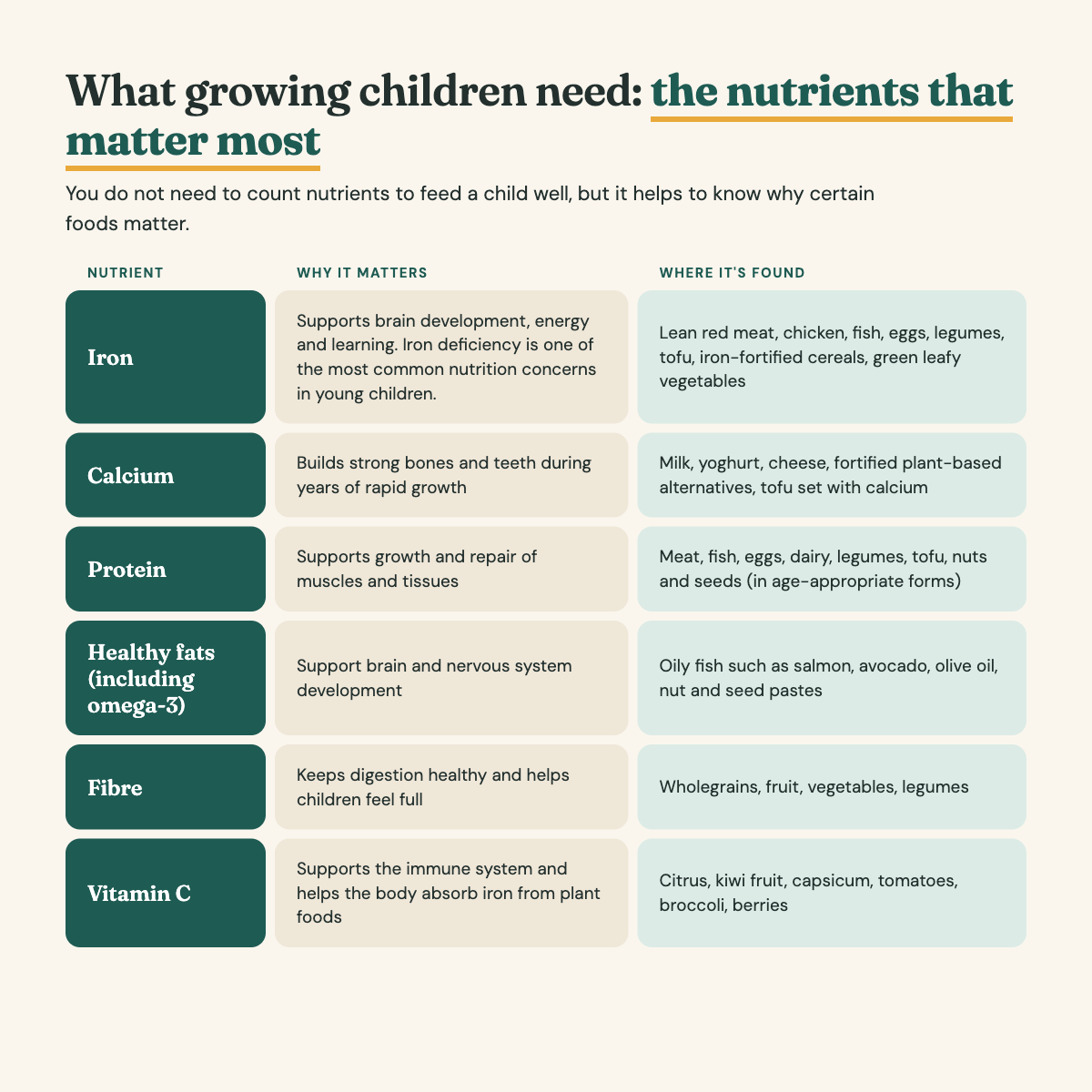
Certain nutrients, such as iron, support brain development. Children with low iron can be tired, irritable, and have trouble concentrating, so good menus include iron-rich foods.
Positive mealtimes build skills. At the table, children practise conversation, turn-taking, independence, and fine motor skills (pouring, spooning, using cutlery).
A day in our kitchen
[Placeholder: add BBELC routine here]
Early morning: Our chef [name, if you wish] prepares breakfast and starts the day's cooking.
Morning tea: Fresh fruit with [e.g. wholegrain toast, yoghurt or homemade muffins].
Lunch: A hot, balanced meal, such as [e.g. a chicken, vegetable and brown rice casserole with a side of steamed greens].
Afternoon tea: [e.g. vegetable sticks with hummus and wholegrain crackers, or a fruit and cheese plate].
Late snack (if applicable): [Example.]
Our menu rotates [weekly/fortnightly/seasonally] and is planned by [our chef with input from a dietitian or nutritionist, if applicable]. Families can view the current menu [on our website, in the foyer or through our family app].

Simple ways to support healthy eating at home
You can build on what happens at the centre.
Eat together when you can. Even a few shared meals a week help. Let your child see you enjoying a range of foods.
Offer new foods without pressure. Serve a small amount next to something familiar and keep offering it. Remember, ten tries is normal.
Involve your child. Washing vegetables, stirring a pot or choosing a fruit at the shops makes food more interesting. Children are far more likely to taste something they helped prepare.
Build a balanced plate. A simple guide is plenty of vegetables, a serve of protein, a serve of wholegrain or starchy food, and dairy or an alternative across the day.
Keep water as the go-to drink. Limit juice, cordial and soft drink.
Ask about the menu. Chatting about what they ate at the centre starts conversations and may reveal that your child is more adventurous at care than at home.
Keep it simple. Healthy eating does not need to be elaborate. Familiar meals made with real ingredients are a great foundation.
What to look for when comparing centres
On your tour, consider asking:
Are meals cooked onsite, and by whom?
Can I see this week's menu? How often does it change?
What does "fresh" mean here? How much is cooked from scratch?
How do you manage food allergies and dietary needs, and who prepares those meals?
Does a dietitian or nutritionist review the menu?
Do the fees include all meals and snacks?
Do educators sit and eat with the children?
How do you support fussy eaters?
How will I know what my child has eaten?
A confident, specific answer is a very good sign that a centre takes nutrition seriously.
Come and taste the difference
The best way to understand what fresh, chef-cooked meals mean for children is to see and smell them for yourself. Book a tour of a Brady Bunch Early Learning Centre near you, visit our kitchen and meet the team who cook for your child.